Learn when to roll off dumpster rental Knoxville, TN needs...
Read MoreWhat Demolition Contractors Knoxville, TN Should Handle First
Planning a demolition project involves more than deciding which structure needs to come down. Property owners must consider permits, utility connections, hazardous materials, site access, and debris removal before work begins. Demolition contractors Knoxville, TN should address these essential details and establish the correct work sequence before equipment arrives. Proper preparation helps prevent avoidable delays, protect surrounding properties, and clarify project costs.
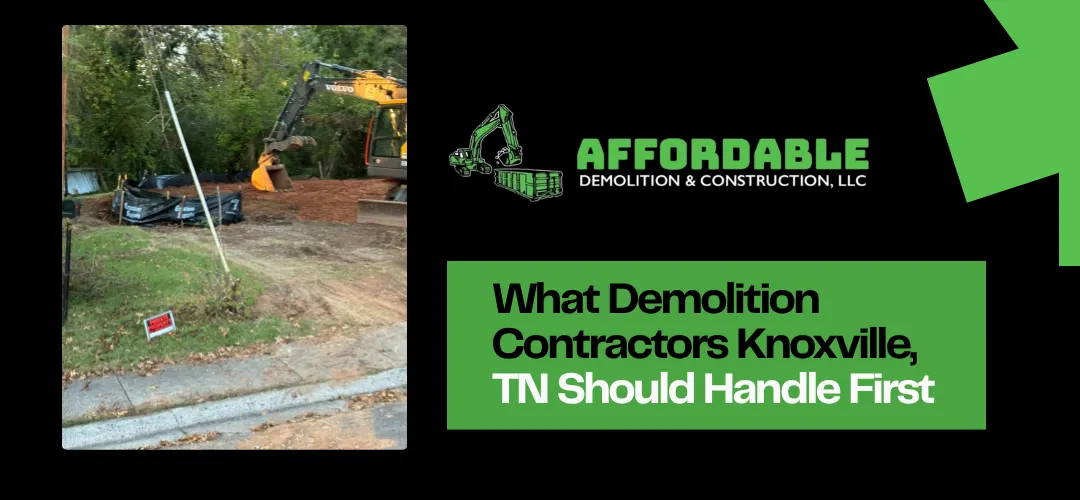
1. Assess the Structure and Define the Work
The first step is determining exactly what needs to be removed. A contractor should review the structure’s size, construction materials, condition, location, and proximity to neighboring buildings, driveways, and public areas. These details help determine the equipment, labor, and protective measures required.
Be clear about whether you need a complete teardown, selective removal, foundation removal, or demolition of a separate structure. These are different scopes of work, and an estimate for one should not be assumed to cover another. Identify anything that must remain and discuss the condition in which you expect the property to be left.
2. Confirm Permits and Local Requirements
Do not schedule demolition based on an assumption that an older or smaller structure is exempt from local requirements. The City of Knoxville has permit categories for total residential and commercial demolition. Property owners planning mobile home demolition Knoxville, TN should confirm the applicable permits and approvals before scheduling work, as requirements depend on the property and proposed project.
Ask who will handle permit paperwork and what information the property owner must provide. If the property is outside Knoxville city limits, check with the appropriate jurisdiction instead of assuming the same requirements apply throughout Knox County.
3. Locate and Disconnect Utilities
Electricity, gas, water, sewer, and communication services can create serious hazards if they remain active during demolition. Identify which services connect to the structure and coordinate required disconnections or protections with the utility providers. Never attempt to disconnect utility equipment yourself.
Underground lines also need attention. Tennessee requires advance notice before excavation or demolition activity and directs responsible parties to request underground utility locating through Tennessee 811. Confirm that the request has been made within the required timeframe and that markings are visible before work begins.
4. Check for Hazardous Materials and Structural Risks
Older buildings may contain asbestos, lead-based paint, or other materials that require specialized handling. Before starting interior demolition Knoxville, TN, do not assume these materials are absent because they are covered or difficult to see. Arrange an assessment when the building’s age or condition raises concerns. Required abatement should be completed by qualified professionals before demolition proceeds.
The initial assessment should also identify unstable walls, damaged roofs, weakened floors, and overhead hazards. Nearby homes, pedestrian routes, and parked vehicles may need protection. Planning for dust, falling debris, and site security helps reduce risks to workers and surrounding properties.
5. Prepare the Property and Plan Equipment Access
Before the crew arrives, remove personal belongings, vehicles, and movable items unless the contractor has agreed to handle them. Clearly identify anything that must be protected or retained. Tell the contractor about narrow driveways, soft ground, slopes, low branches, and other access limitations.
For a mobile home project, clarify what is included beyond the teardown. The service page provides relevant information about the removal process. Ask whether attached additions, skirting, steps, supports, and the foundation are included. Never assume related structures or materials are covered unless the written estimate confirms it.
6. Establish Debris Removal and Final Site Conditions
Demolition is not finished simply because a structure has been taken down. A demolition company Knoxville, TN property owners hire should explain how materials will be loaded, transported, and disposed of, and whether disposal charges are included. Ask how concrete, metal, wood, roofing, and mixed debris will be handled.
Define the expected condition of the property after the work. Does the scope include foundation removal, backfilling, rough grading, or only debris cleanup? These tasks affect project costs and determine whether the site is ready for the next contractor. Request a written breakdown of included services, exclusions, cleanup expectations, and additional-work procedures.
7. Coordinate Demolition With the Next Project
If demolition is part of a renovation or new construction plan, coordinate the schedule with the builder or remodeling contractor. Confirm when the area needs to be cleared, whether any walls or utilities must remain temporarily, and what condition the next stage requires.
For renovation projects, selective removal can support better project planning. Identify load-bearing elements and systems that must remain before interior materials are removed.
When comparing providers, look beyond the initial price. A reliable contractor should clearly explain the work sequence, preparation, cleanup, and responsibilities. Compare written estimates to identify missing services and unclear costs before agreeing to a project.
Work With Affordable Demolition & Construction LLC
Affordable Demolition & Construction LLC helps property owners around Knoxville with residential and commercial demolition, structure removal, interior demolition, and debris hauling. Discussing the property, access conditions, materials, and intended next steps helps establish a scope that reflects the project’s needs. Preparing for a demolition project? Contact Affordable Demolition & Construction LLC to discuss your property and request an estimate.
Frequently Asked Questions
The structure and project scope should be assessed, applicable permits confirmed, utilities located and disconnected as required, and potential hazardous materials evaluated before physical demolition begins.
Requirements depend on the structure, location, and proposed work. Confirm the applicable permit requirements for your property with the relevant local authority before scheduling work.
Responsibilities should be agreed upon before work begins. The property owner, contractor, and utility providers may each have tasks. Confirm disconnections or protections directly with the providers.
The estimate should state whether loading, hauling, disposal fees, and final cleanup are included. It should also clarify whether foundation removal, backfilling, or grading requires additional work.
Resolve permits, utility coordination, underground locating, hazardous-material concerns, site access, and property clearing before the scheduled start. Confirm the scope and responsibilities with the contractor in writing.
Recent Posts
How Waste Dumpster Rental Knoxville, TN Prevents Load Rejections
Learn how waste dumpster rental Knoxville, TN helps prevent load...
Read More
Why Interior Demolition Services Alcoa TN Need a Clear Plan
Explore interior demolition services Alcoa TN and learn how proper...
Read More
Why Dumpster Rental Knoxville, TN Requires Proper Planning
Learn how to plan dumpster rental Knoxville, TN projects with...
Read More
How Interior Demolition Knoxville, TN Makes Room for New Layouts
Explore how interior demolition Knoxville, TN prepares homes for new...
Read More
Affordable Demolition & Roll-Off Dumpster Rental in Knoxville, TN: Complete Project Guide
Affordable Demolition & Construction LLC handles house, mobile home, garage,...
Read More
Mobile Home & Garage Demolition in Knoxville & Maryville, TN: Fast, Safe Structural Removal
Affordable Demolition & Construction LLC handles structural teardown, concrete slab...
Read MoreOffice Timming
Mon - Sat 8:00am - 6:30pm

Copyright © 2025
Design & Developed with ♥ by