Learn when to roll off dumpster rental Knoxville, TN needs...
Read MoreWhy Interior Demolition Services Alcoa TN Need a Clear Plan
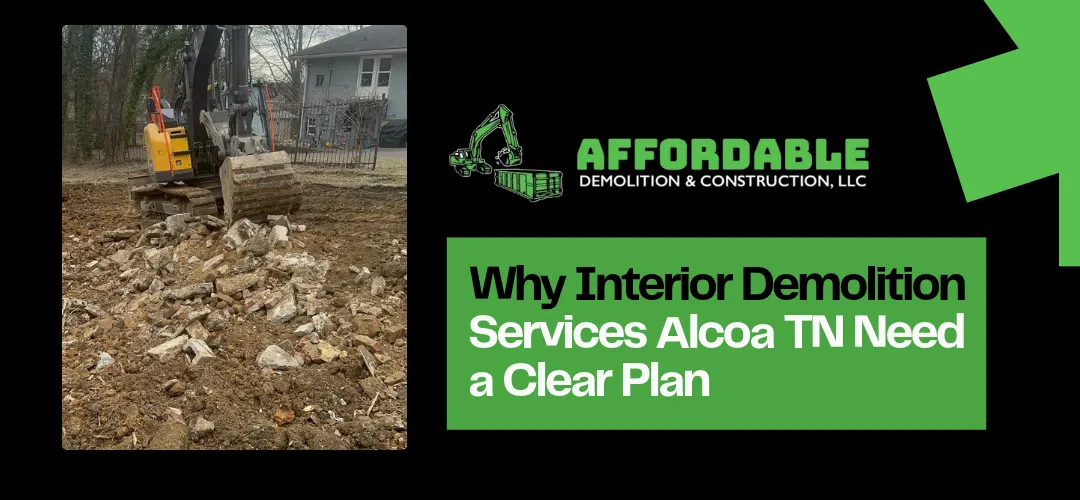
Removing interior walls, flooring, cabinets, or outdated fixtures requires more than physical labor. Without proper preparation, demolition can damage areas that need to remain intact, create unnecessary disposal costs, and delay renovation work. Interior Demolition Services Alcoa TN can help property owners prepare their spaces for remodeling by addressing safety, structural considerations, material removal, and debris management before work begins.
1. Identify the Scope of Demolition Before Starting
Every interior demolition project has different requirements. Some property owners want to remove outdated kitchen cabinets, while others need bathroom fixtures, flooring, drywall, or interior partitions removed before a complete renovation.
Start by identifying exactly what needs to be removed and what must remain. Walk through the property and create a list of the areas included in the project. This helps establish clear expectations and reduces the possibility of removing materials that are still needed.
Consider the following details when defining the project:
- Removal areas: Identify the rooms, walls, flooring, cabinets, and fixtures included in the work.
- Existing conditions: Check for visible damage, moisture problems, and deteriorating materials.
- Protected areas: Identify surfaces, doorways, and structural components that must remain undamaged.
- Renovation requirements: Discuss what the next construction phase requires from the demolition crew.
A clearly defined scope makes it easier to estimate labor, equipment, disposal requirements, and project timelines.
2. Check Structural Components Before Removing Walls
Before removing interior walls, determine whether they are load-bearing or support floors, ceilings, or roof components. A qualified contractor or structural engineer can assess the structure and identify any additional support requirements.
Also check for plumbing lines, electrical wiring, and ventilation systems within the demolition area. Proper evaluation helps prevent accidental damage and protects the remaining structure.
3. Prepare Utilities and Protect the Property
Interior demolition can expose electrical wiring, plumbing connections, and other building systems. Before work begins, identify which utilities serve the affected rooms and determine whether they need to be disconnected, relocated, or protected.
Electrical circuits should be handled by qualified personnel, while plumbing connections may require a licensed plumber. Gas lines and heating equipment also need appropriate attention when they are located near the demolition area.
Property protection is equally important. Cover floors, seal off unaffected rooms where appropriate, and protect windows, doors, and remaining fixtures from dust and flying debris.
If you are comparing a demolition contractor in Alcoa TN, ask how the company approaches utility coordination and property protection. Understanding these procedures before hiring can help you avoid misunderstandings during the project.
4. Understand Permits and Local Project Requirements
Some demolition projects may require permits or additional approvals depending on the scope of work, property type, and local regulations. Removing a non-load-bearing partition may have different requirements from altering structural components or changing major building systems.
Before scheduling demolition, check whether your project requires approval from the relevant local building department. Ask about inspection requirements, documentation, and any restrictions affecting the property.
Older buildings may also contain materials that require special handling. Asbestos-containing materials and lead-based paint can present health risks when disturbed. If these materials are suspected, arrange appropriate testing and follow applicable removal and disposal requirements before demolition begins.
5. Coordinate Demolition With the Renovation Schedule
Interior demolition is usually one stage of a larger improvement project. The work needs to be coordinated with electricians, plumbers, flooring installers, carpenters, and other construction professionals who may follow.
For example, removing kitchen cabinets and drywall may need to happen before electrical modifications or new cabinet installation. Similarly, bathroom demolition should be coordinated with plumbing work and waterproofing preparations.
When comparing demolition contractors Alcoa TN, discuss the expected work sequence, access requirements, debris removal, and estimated completion schedule.
Ask what conditions must be met before the next contractor can begin. A properly prepared demolition area can make the transition between project stages more manageable and help reduce unnecessary scheduling conflicts.
6. Compare Estimates Beyond the Total Price
The lowest demolition estimate does not always represent the best overall value. Two contractors may quote different prices because they include different services, labor requirements, equipment, and disposal arrangements.
Request a written estimate that explains the work included. Compare whether each proposal covers material removal, debris hauling, disposal fees, site protection, and cleanup.
You should also ask about:
- Expected project duration and scheduling.
- Additional charges for unexpected conditions.
- Responsibility for utility coordination.
- Insurance and applicable licensing.
- Procedures for handling unforeseen structural or material concerns.
Clear pricing helps you understand what you are paying for and makes it easier to compare contractors based on the actual scope of work.
Interior Demolition Support From Affordable Demolition & Construction LLC
Affordable Demolition & Construction LLC serves property owners throughout the Knoxville area and surrounding communities, including Alcoa. The company provides interior demolition solutions for projects involving kitchens, bathrooms, walls, flooring, and other interior materials. Its approach focuses on understanding the removal requirements, coordinating debris management, and preparing spaces for their next stage of improvement.
Whether you are planning a partial renovation or a larger interior project, discuss your requirements before scheduling the work. Request a Quote Today!
Frequently Asked Questions
Remove personal belongings, furniture, decorations, and valuables from the affected areas. Discuss appliances, fixtures, and materials that need to remain with your contractor before work starts.
Some interior partitions are non-load-bearing, while others support structural components. Have the wall evaluated before removal to determine whether additional engineering or support is necessary.
The timeline depends on the project size, materials, accessibility, and removal requirements. A small bathroom may take less time than a complete interior strip-out involving several rooms.
Permit requirements depend on the work being performed and applicable local regulations. Structural changes, electrical modifications, and plumbing work may involve additional approvals or inspections.
Materials are collected and transported for appropriate disposal or recycling, depending on their type and condition. Hazardous materials require separate handling under applicable regulations.
Recent Posts
How Waste Dumpster Rental Knoxville, TN Prevents Load Rejections
Learn how waste dumpster rental Knoxville, TN helps prevent load...
Read More
Why Interior Demolition Services Alcoa TN Need a Clear Plan
Explore interior demolition services Alcoa TN and learn how proper...
Read More
Why Dumpster Rental Knoxville, TN Requires Proper Planning
Learn how to plan dumpster rental Knoxville, TN projects with...
Read More
How Interior Demolition Knoxville, TN Makes Room for New Layouts
Explore how interior demolition Knoxville, TN prepares homes for new...
Read More
Affordable Demolition & Roll-Off Dumpster Rental in Knoxville, TN: Complete Project Guide
Affordable Demolition & Construction LLC handles house, mobile home, garage,...
Read More
Mobile Home & Garage Demolition in Knoxville & Maryville, TN: Fast, Safe Structural Removal
Affordable Demolition & Construction LLC handles structural teardown, concrete slab...
Read MoreOffice Timming
Mon - Sat 8:00am - 6:30pm

Copyright © 2025
Design & Developed with ♥ by